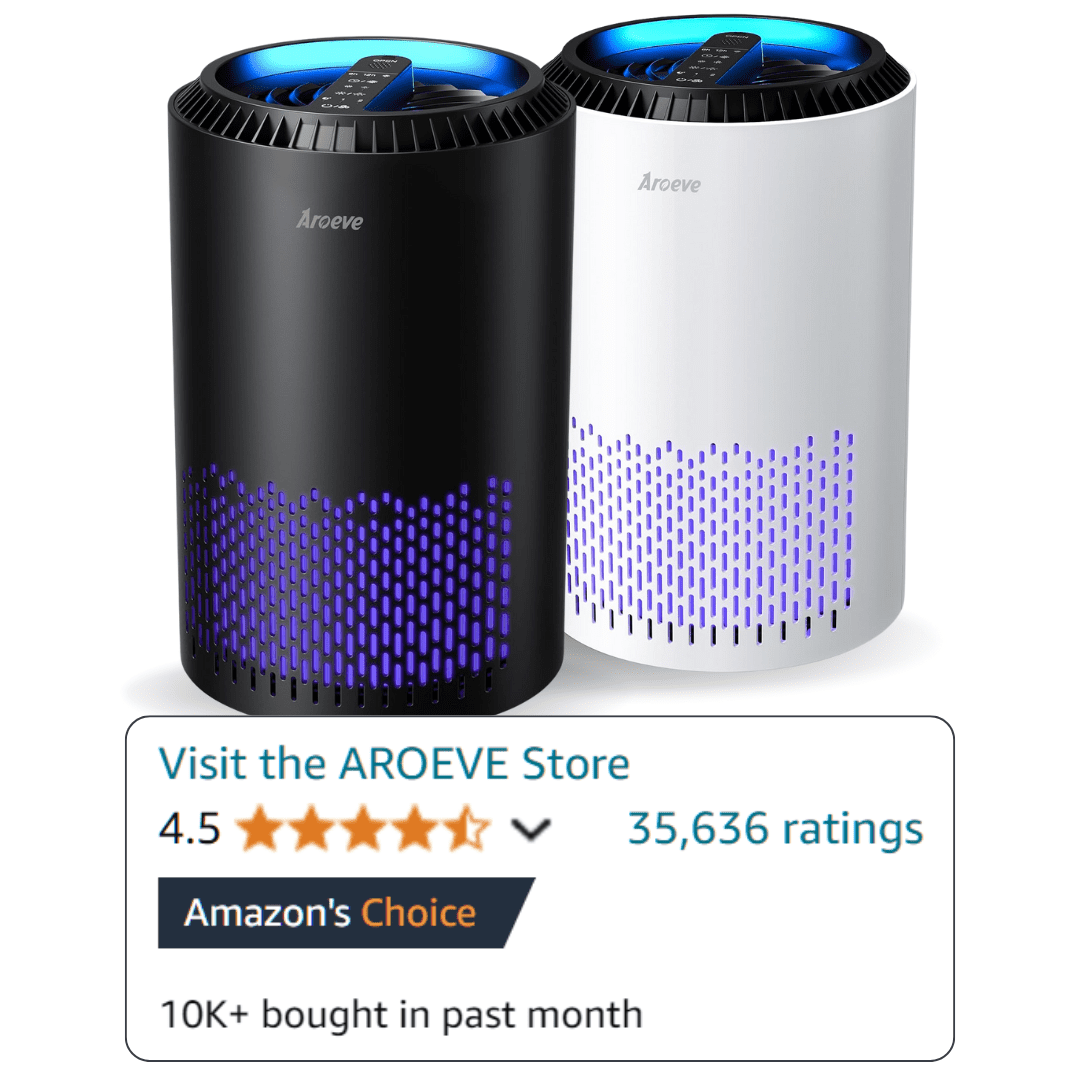
If PM2.5 rises when you cook, start by improving how cooking emissions leave the kitchen. Heating food and oil can release fine particles even on an electric or induction stove. An air purifier can help capture particles that escape into the room, but it cannot replace a range hood that exhausts outdoors.
A sudden red light also deserves a closer look at the display: PM2.5 concentration, AQI and VOC readings mean different things. Here is how to respond to a cooking-related spike without assuming the monitor is broken or buying equipment you may not need.
What to do while the reading is high
- Reduce the source. Lower excessive heat or stop cooking safely if food or oil is burning. Do not deliberately create smoke to test a monitor.
- Use your range hood. Run it whenever cooking on the stove or in the oven. Prefer an outdoor-vented hood and use back burners when practical. EPA recommends leaving the hood running for 10–20 minutes after cooking.
- Use clean outdoor air when conditions allow. Open a window or door only when outdoor air quality, weather and safety permit. Check AirNow before opening up during smoke or other outdoor pollution.
- Run an appropriately sized particle-filtering air cleaner. Use an effective fan setting and keep its airflow clear. Continue the exhaust ventilation; these tools do different jobs.
These steps follow EPA’s advice for cooking-related particles and its kitchen air-quality checklist. Clean grease filters and cooking surfaces according to their instructions so accumulated residue does not become another source.
A CO alarm is a separate emergency. If a carbon monoxide alarm sounds, get everyone outside and call 911 or the fire department. Do not stay inside troubleshooting the particle monitor or reenter until responders say it is safe. Follow CPSC’s CO alarm instructions.
Why cooking raises PM2.5, even without a gas flame
The food, cooking fat and appliance can all contribute to emissions. Frying, grilling and overheated food are useful clues when a particle reading jumps around mealtime. Changing from gas to electricity removes the burner combustion source, but it does not prevent food and oil from generating particles.
Lawrence Berkeley National Laboratory’s cooking-emissions research distinguishes the gases and ultrafine particles associated with combustion from the particles and organic compounds emitted by cooking itself. This is why kitchen ventilation matters with gas, conventional electric and induction cooking.
The PM2.5 number does not reveal the mixture’s chemical composition. It also does not tell you the concentrations of carbon monoxide, nitrogen dioxide or other gases.
First check what your monitor actually displays
- PM2.5 in µg/m³: an estimate of fine-particle mass in a volume of air.
- AQI: an index calculated from pollutant data. It is not the same number as PM2.5 concentration.
- VOC or TVOC: a gas-related measurement or index, depending on the device. A particle-filter recommendation alone does not resolve a VOC reading.
- A colored light: check the manual to learn which sensor and threshold trigger it.
Do not read an instantaneous kitchen value as though it were a full day’s outdoor exposure. AirNow explains that the daily particle AQI uses a 24-hour period, while its current NowCast uses multiple hours of data. A consumer monitor may calculate its displayed index differently.
EPA notes that consumer-monitor alerts and performance vary. A monitor cannot diagnose your health risk or certify that every pollutant is low. See its guidance on indoor air monitors.
Why the reading can stay high after dinner
Turning off the burner stops that activity, but particles already released still need to leave the air. How quickly readings fall depends on ventilation, filtration, room layout and whether another source remains active. There is no universal “back to normal in 15 minutes” promise.
EPA’s 10–20-minute hood recommendation is a ventilation habit, not a guarantee that the entire home has cleared. A practical approach is to watch the trend after cooking ends while continuing appropriate ventilation and filtration. Returning toward the pre-cooking reading helps you compare events; that starting reading is not automatically a health-based safe level.
If the reading remains elevated, ask:
- Is food residue still heating in the oven, toaster or pan?
- Does the hood actually exhaust outdoors, or does it blow filtered air back into the kitchen?
- Did outdoor smoke enter through an open window?
- Is another source running, such as a candle or ultrasonic humidifier?
Why a running range hood may not prevent a spike
Recirculating hoods have important limits. A metal grease filter does not make a hood an outdoor exhaust system. The California Air Resources Board explains that ductless hoods capture grease but do not effectively remove cooking pollutants and moisture. Check your hood’s manual or have its vent route inspected.
Outdoor-vented hoods vary, too. In a Berkeley Lab study of four hoods, capture of particles from front-burner, high-heat stir-frying varied substantially by hood and fan setting. Back-burner hamburger cooking had much better capture under the tested conditions. Those results do not predict a percentage for your kitchen; they show why burner position, hood design and airflow matter.
Before paying for a bigger hood, have a qualified professional check the installation and replacement-air needs. High exhaust flow can cause combustion-appliance backdrafting in some homes, drawing combustion products indoors. EPA flags this risk in its cooking guidance linked above.
Could steam or monitor placement affect the result?
Yes. EPA identifies relative humidity, temperature and location among factors that can affect monitor accuracy. For a room-level reading, follow the device instructions and keep it out of the direct plume above a pot, away from open-window drafts and away from purifier outlets. Leave its air inlet unobstructed.
Do not dismiss a spike as “just steam.” In a study of six consumer monitors, responses varied with the source and particle size. The devices responded to frying and grilling aerosols but missed some sources dominated by very small particles. A low reading therefore cannot prove that cooking produced no pollution.
Once the monitor has an appropriate location, keep it there when comparing meals. Moving it from beside the stove to another room changes the measurement location as well as the number.
A simple cooking-event log that helps you choose the next step
Use ordinary meals as observations. Keep your hood and normal safety measures on; never repeat a smoky event on purpose.
- Before: record the monitor model, measurement and units, location, starting reading and outdoor air conditions.
- During: note the cooking method, burner position, hood setting, open windows and purifier setting.
- After: record when cooking ended and whether readings kept rising, fell steadily or remained elevated.
- Next meal: record a practical improvement, such as using a back burner, avoiding overheated oil or following hood-filter maintenance instructions.
Compare reasonably similar meals. A different food, cooking temperature or outdoor-air condition can change the result. This log helps identify patterns and gives a technician useful context; it is not a laboratory test of a hood or purifier.
Do you need a better air purifier?
Check the existing unit before replacing it. Is the filter installed correctly and due for replacement? Is the intake blocked? Is it on a low setting? Our air-purifier checks explain what you can assess at home.
When choosing a particle cleaner, compare its clean air delivery rate (CADR) with the whole area it serves, including connected space in an open floor plan. CADR is usually rated at the highest speed. Higher speeds and longer operation generally filter more air. HEPA filtration can capture particles, while gas removal requires suitable gas-filter media; CADR does not rate gas removal. Avoid equipment that intentionally generates ozone. These are key distinctions in EPA’s air-cleaner guide.
If large, repeated cooking-related spikes continue after sensible changes, bring the event log and hood details to a ventilation or indoor-air-quality professional. Persistent symptoms also warrant medical advice. The useful goal is less pollution released, better capture at the stove and less time with elevated particles throughout the home.
This is a source-based troubleshooting guide, not a report of hands-on product testing. Sources checked October 15, 2026.