Your air-quality monitor can rise during or after vacuuming because cleaning lifts settled dust into the air, and the vacuum itself can release particles. Both can happen while dirt is being collected from the floor. A short-lived spike alone does not tell you whether the vacuum is leaking or whether the cleaning was worthwhile.
Start by checking which number rose: PM10, PM2.5, a VOC reading or a general air-quality score. Then look at the timing, the vacuum’s condition and what else was happening in the room. You usually do not need to buy a new vacuum to begin investigating.
What to do when the reading jumps
- Pause if cleaning is creating a visible dust cloud. Avoid more dust-stirring while you check the equipment.
- Keep people with asthma or allergies away from the area being vacuumed. EPA specifically recommends this to reduce exposure to disturbed dust.
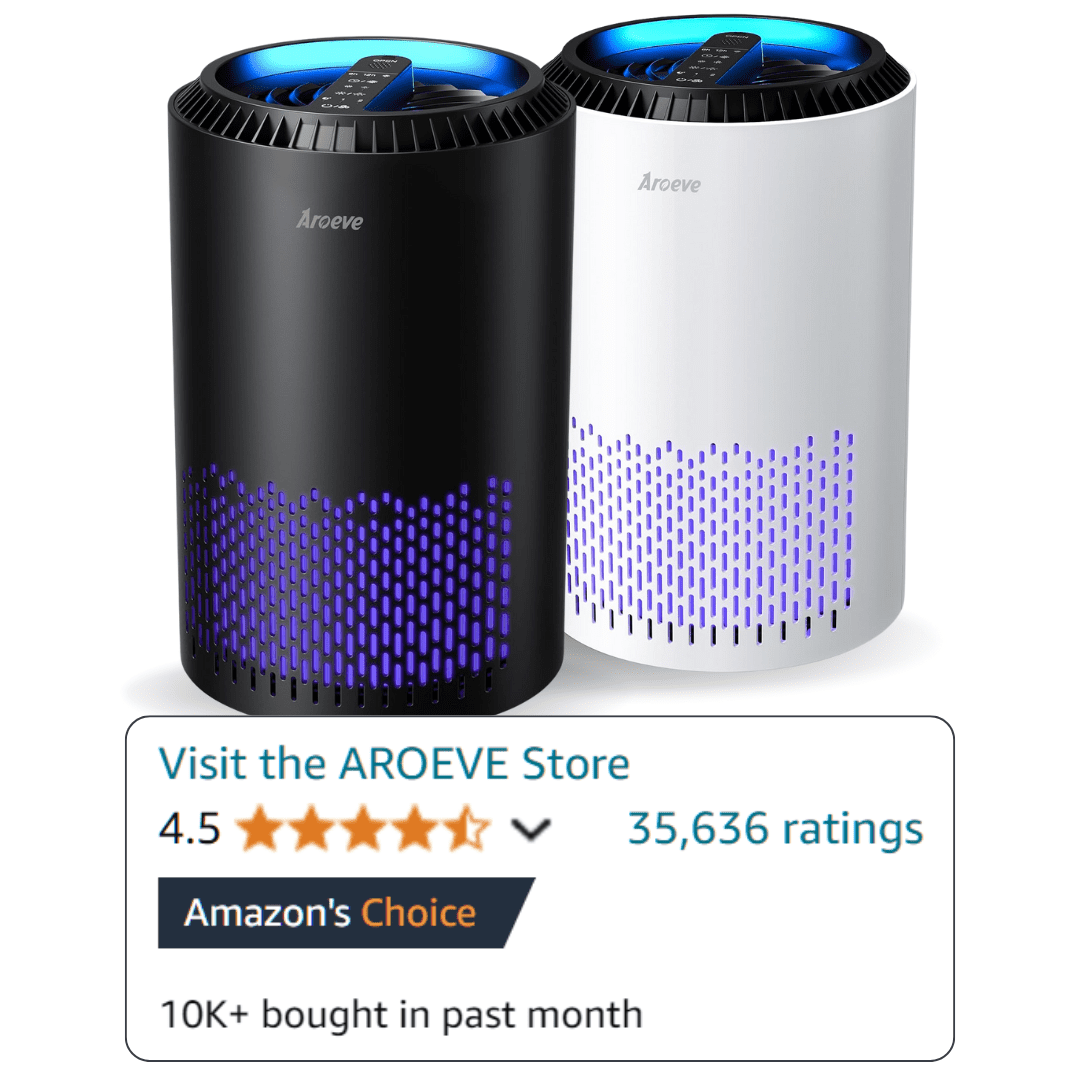
- Use particle filtration. If you have a portable air cleaner, run it at an effective setting with its intake and outlet unobstructed.
- Ventilate when outdoor conditions permit. Check outdoor air quality before opening windows during smoke or pollution events; also consider pollen, weather and safety.
EPA’s indoor-particle guidance recommends considering a HEPA-filter vacuum to limit dust escaping back into the air. It also recommends dusting with a damp cloth to help keep settled dust from returning to the air.
This guide covers ordinary household cleaning. Suspected lead or asbestos dust, renovation debris and significant contamination need a different response. Stop disturbing that material and get appropriate professional guidance rather than testing a household vacuum on it.
PM10 and PM2.5 tell different parts of the story
EPA defines PM10 as particles generally 10 micrometers and smaller, and PM2.5 as fine particles generally 2.5 micrometers and smaller. PM10 includes the PM2.5 fraction. The coarse fraction between those sizes is often written PM10–2.5.
Household dust is a mixture of sizes and materials. Some dust can contribute to PM2.5; other dust is larger than the size range your monitor reports. A low PM2.5 reading therefore does not mean that a carpet or room is free of dust. A higher PM10 reading does not identify a particular allergen.
Check the units, too. A PM concentration in µg/m³ is different from an AQI number, particle count or proprietary color score. If only the VOC display changed, a particle-filter troubleshooting checklist may miss the relevant source, such as a cleaning product used at the same time.
Two ways vacuuming can put particles into the air
1. Movement stirs up dust already in the room
Walking, moving furniture and pushing a vacuum across carpet can disturb settled material. Researchers call this resuspension. It can happen before that dust ever enters the vacuum.
A 2008 residential-carpet study used two non-HEPA vacuums in 46 experiments across 12 apartments. It found substantial PM10 resuspension, with the increased mass mostly in particles larger than 2.5 micrometers. PM2.5 resuspension was small in those experiments. Moving a switched-off vacuum across carpet also stirred up particles.
That study helps explain why a spike does not automatically prove an exhaust leak. Its results do not predict the size of a spike in your home or establish how every modern vacuum performs.
2. The vacuum releases particles
Particles can also come from the running machine. A study published in 2012 measured direct particle and bacterial emissions from 21 vacuums and found large differences among them, including differences in PM2.5 emissions.
The practical lesson is to check the whole machine: the correct filter, its fit, the bag or bin, the seals and the maintenance instructions. That older study is evidence that emissions vary, not a current ranking of bagged, bagless or particular brands. A HEPA filter label alone does not verify that every possible leakage path in an assembled vacuum is sealed.
Check the vacuum before replacing it
- Switch it off and unplug it before inspection. For cordless machines, follow the manufacturer’s instructions for safe maintenance.
- Check the bag or bin. Look for overfilling, an incorrectly fitted bag, a lid that does not close properly or obvious damage. Empty or replace it as directed, minimizing dust release and keeping people away from the plume.
- Check every required filter. Confirm that the correct filters are present and seated properly. Clean or replace them on the manufacturer’s schedule. Wash only filters explicitly labeled washable and let them dry fully as instructed.
- Look for accessible blockages or damaged connections. Use the manual’s procedure. Do not dismantle motors or defeat safety features.
- Use the appropriate floor setting and attachment. Follow the instructions for the surface you are cleaning. Avoid dry sweeping or shaking dusty rugs indoors as an added “test.”
Do not run the vacuum without its filters, hold the monitor against the exhaust, or deliberately release dust to see what happens. These checks cannot certify filtration performance. Persistent visible dust discharge, a burning smell or abnormal operation is a reason to stop using the machine and seek service.
Use a simple log to find a repeatable pattern
At your next ordinary cleaning session, keep the monitor in its recommended location and record:
- The sensor model, displayed pollutant and units
- The reading before cleaning, its peak and how it changes afterward
- The room, floor type, vacuum and whether its bag or filter was recently serviced
- Window position, air-cleaner setting and other activities, including cooking or spraying cleaners
Keep the monitor out of direct exhaust, purifier airflow and mist. Keep the setup similar when comparing normal cleaning sessions. A repeated pattern can help you choose the next maintenance step, but a home comparison cannot reliably separate exhaust emissions from stirred-up floor dust.
EPA notes that monitor performance can depend on placement, humidity, temperature and other factors. A 2020 study of six low-cost monitors found responses varied by particle source; PM10 results were more variable than PM2.5. Treat a consumer monitor as a way to follow patterns, not an instrument that identifies dust composition or certifies a room as safe.
Why is the reading still high after you finish?
Stopping the vacuum does not instantly remove particles already airborne. They can be removed by ventilation and filtration or settle onto surfaces. The timing depends on the particles, the room and the operating conditions, so there is no single “normal” clearing time for every home.
If readings remain elevated, check for another ongoing source. Cooking-related particles may be spreading from the kitchen. An ultrasonic humidifier can also raise a particle reading. Outdoor pollution, a mist source near the sensor or repeated dust-disturbing activity may complicate the pattern.
A particle-filtering air cleaner can supplement cleaning. Choose one with a clean air delivery rate appropriate for the room and maintain it as directed. EPA’s air-cleaner guide explains sizing and warns against devices that intentionally produce ozone. Filtration does not remove every pollutant or replace source control.
Common questions
Should I stop vacuuming because the monitor goes up?
A temporary rise alone is not enough reason to abandon routine cleaning. Focus on removing settled dirt while limiting how much becomes airborne. If each session creates a large or persistent change, review equipment, technique and other sources before continuing the same routine.
Will a HEPA vacuum prevent every spike?
No. High-efficiency filtration can help retain collected dust, but walking and moving the vacuum can disturb dust outside the machine. Filter condition, fit and the assembled vacuum’s design also matter.
Does a low reading mean there are no allergens?
No. A general particle monitor does not identify specific allergens, and it does not measure all sizes or all pollutants. If cleaning seems to trigger symptoms, discuss that pattern with a healthcare professional rather than relying on the display alone.
Bottom line: Check the pollutant, maintain the vacuum and watch the pattern across ordinary cleaning sessions. Combine careful dust removal with appropriate filtration and clean-air ventilation. The goal is less dust in the home and less dust stirred into the air while cleaning.
Prepared by the IAQ Team from the linked EPA guidance and published research. This guide does not include original vacuum or monitor testing.