An air purifier can help reduce airborne pet allergens when its particle filtration and room-size rating fit the space. It will not remove pet hair from furniture or replace regular cleaning. For allergies, air cleaning is one part of exposure control and medical care, not a cure. AAFA’s pet-allergy guidance explains the broader plan.
Start with the problem you want to solve: airborne dander, hair on surfaces or odor. Each needs a different check before you buy equipment.
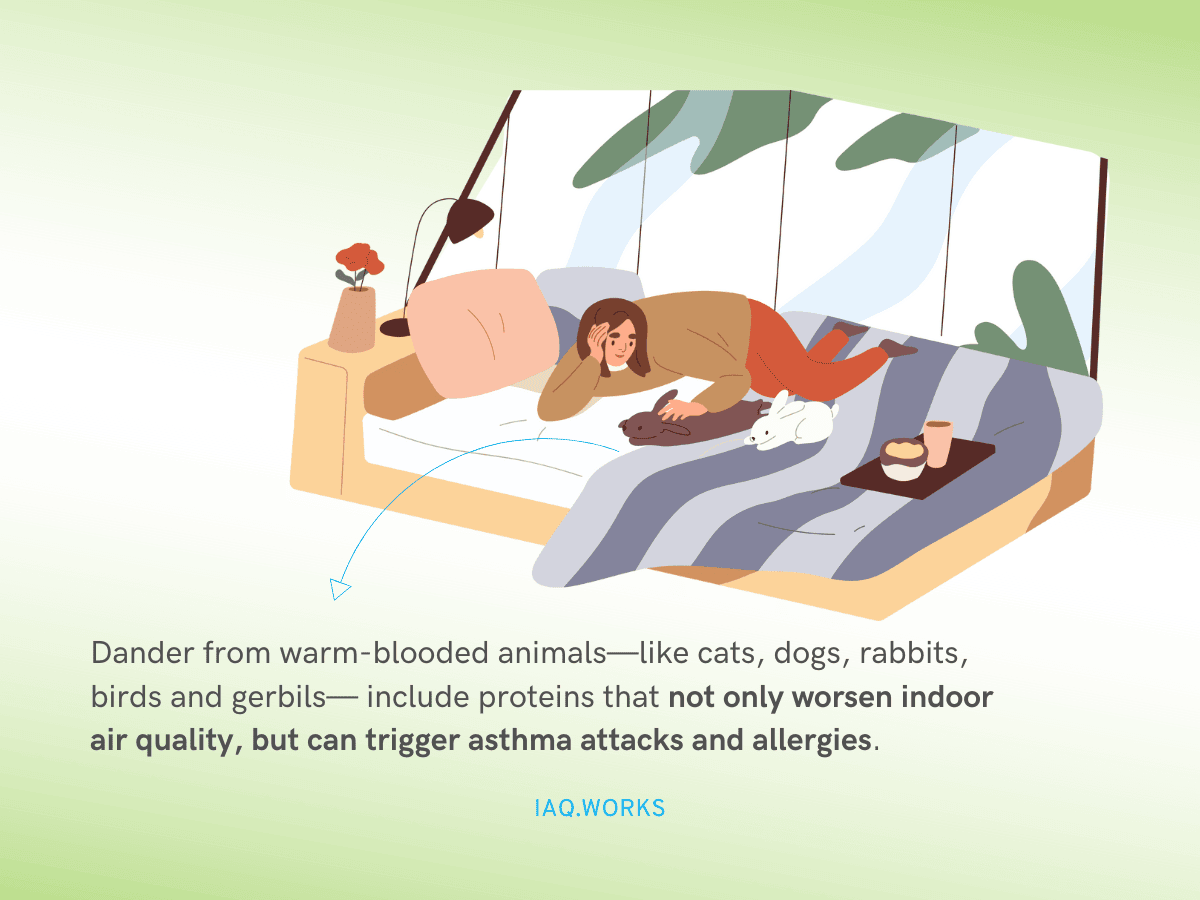
Cats and dogs aren’t the only household pets. Many families also have pet rabbits, guinea pigs, hamsters and ferrets. All of these animals shed and release proteins that cause allergic reactions.
These proteins are found in their hair, saliva, urine and dead skin cells (also known as dander or pet dander). Pet dander and the related pet epithelia are a type of biological pollutant, meaning they come from a living organism.
Individuals with pet allergies who are exposed to cats, dogs or other pets may experience the following symptoms:
- Runny nose
- Sneezing
- Itchy or watery eyes
- Itchy nose or throat
- Congestion
- Coughing
Repeated exposure can cause persistent symptoms in some people with pet allergies. Symptoms can also have other causes. A clinician can help identify the trigger and recommend an appropriate treatment plan.
Should You Get an Air Purifier if You Have Pets?
The all-important question. As aforementioned, people with pet allergies aren’t actually allergic to their pet’s hair, saliva, urine or dander. They are allergic to the protein found in these biological pollutants.
 More: Explore everyday source-control and cleaning steps for a home with pets. Learn more →
Keep source control, cleaning and medical care in the plan. AAFA recommends measures such as keeping pets out of bedrooms, cleaning fabric furnishings and using suitable filtration. Discuss persistent symptoms with a clinician; do not replace prescribed treatment with an air purifier. Read AAFA’s recommendations.
Use air cleaning to complement the steps that address the source of allergens. Decide which room needs attention and what the device can reasonably contribute.
How Much Do Air Purifiers Help With Pet Allergies?
A suitable particle-filtering air cleaner can capture airborne particles that pass through it. Pet allergens also settle on surfaces, so cleaning and reducing exposure remain important. The result depends on the room, device, operating time and your sensitivity.
Do not use a particle-removal percentage as a prediction of symptom relief. Keep following your treatment plan and discuss persistent symptoms with a clinician. AAFA describes filtration as one part of managing pet exposure.
Do Air Purifiers Help With Pet Dander?
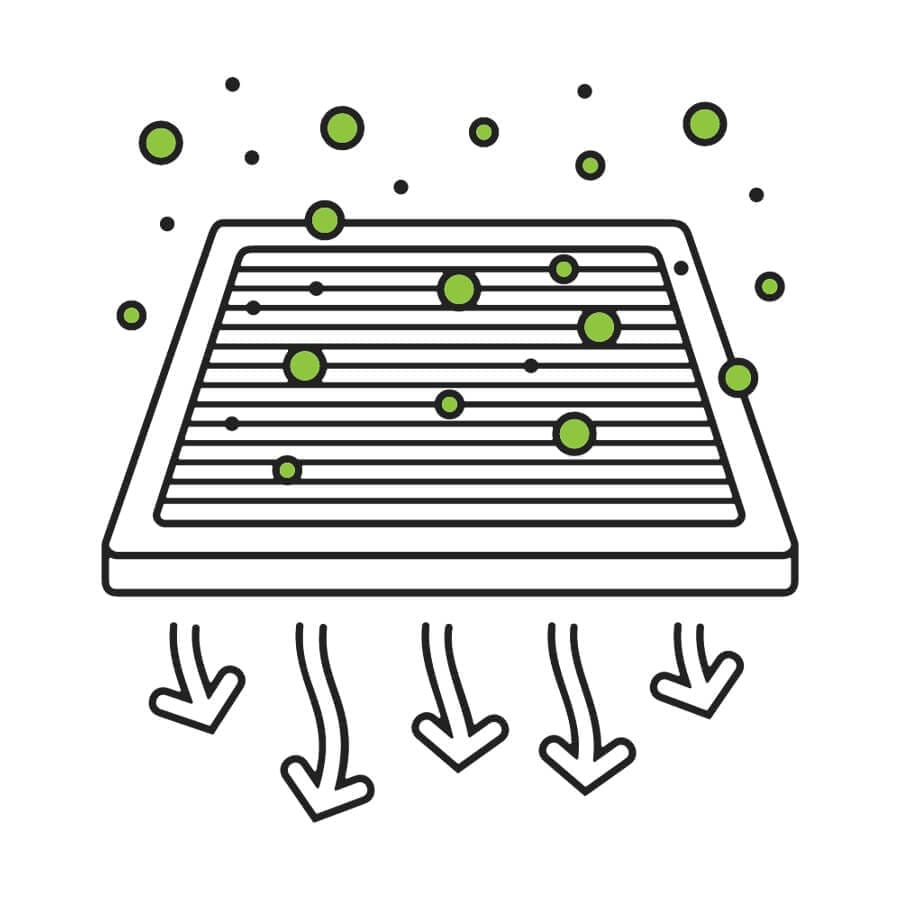
EPA describes HEPA filters as capable of removing at least 99.97% of particles at 0.3 microns under the filter’s performance definition. That figure describes filtration, not the fraction of allergens removed from a furnished room or a guarantee of symptom relief.
For a room air cleaner, compare the exact model’s clean air delivery rate, or CADR, and suggested room size. AHAM’s directory lists independently verified models. A filter label alone does not tell you how quickly the complete device cleans the room.
Do Air Purifiers Get Rid of Pet Odors?
A particle filter and a gas-removal filter do different jobs. Activated carbon can capture some odor-causing gases through adsorption onto its surfaces. Performance and useful life depend on the gas and the amount and design of the media. Cleaning the odor source remains important. EPA’s technical summary explains the limits of gas-removal filters.
Best Air Purifiers for Pet Allergies
Compare the device with the specific problem in the room. The checks below help separate particle capture, odor control and installation requirements.
HEPA Air Purifiers For Pet Dander
A HEPA label does not replace checking the complete device’s room suitability. Before choosing a model, write down:
- The room’s floor area and ceiling height
- The exact model and its verified suggested room size
- Replacement-filter part numbers, cost and availability
- Noise at the setting you expect to use
- Placement with unobstructed airflow, following the manual
Use the manufacturer’s placement instructions and keep airflow clear. ENERGY STAR’s room-air-cleaner guide explains sizing and placement.
 More: Confused about HEPA, MERV and any other air filter acronyms you might have come across? Check out our simple MERV vs. HEPA guide for homeowners →
A freestanding room purifier uses its own fan. For central equipment, confirm the filter dimensions and efficiency that the system can accommodate before changing filters or adding equipment. HEPA is a separate performance designation, not simply a MERV rating of 16 or above. EPA’s home air-cleaner guide covers system compatibility.
Best Air Purifiers For Pet Odors
Ask which gases the product was tested against, which filter performs that work and when it needs replacement. “Contains carbon” alone is not enough information to compare two odor-control claims.
If you need both particle and gas removal, evaluate the evidence for each function. A fresher smell does not demonstrate that allergens or every pollutant have been removed.
Best Home Air Purifier For Pets
A portable unit may be practical for a bedroom or another single room. A central air-cleaning proposal requires a separate check of the existing HVAC system, airflow and filter compatibility. Decide which spaces need help before paying for whole-home equipment. Review EPA’s portable and central filtration guidance.
Compare the full cost: device, installation if needed, replacement media, energy and maintenance. Ask what the quoted product addresses and what cleaning or source-control work remains.
Home Air Purifier for Pets
We love our furry friends to the moon and back! For most homeowners, their pets are their family. Unfortunately, that doesn’t make pet allergies any easier to deal with.
Choose equipment for the pollutant and the room, then check how it performs with the operating and maintenance routine you can sustain. Keep cleaning and exposure reduction in the plan, and use clinical care for allergy diagnosis and treatment.